![Gel[:b]lau](https://gelblau.net/wp-content/uploads/2022/11/gelblau-logo.jpg)
People for people: medical care for war victims
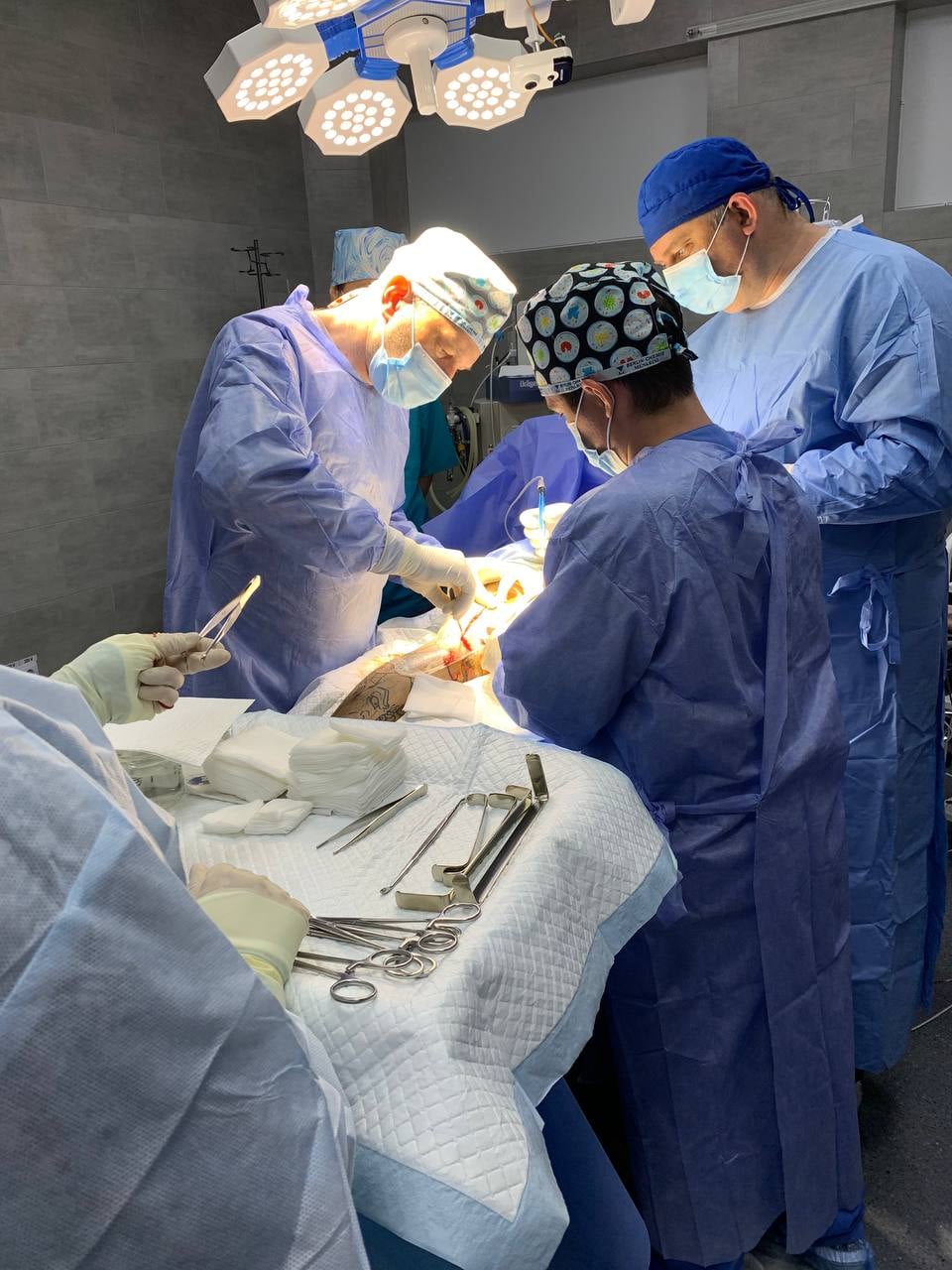
From the very first days, Stanislav Onyshchuk, an entrepreneur and director of a plastic surgery and cosmetology clinic, founded the First Volunteer Surgical Hospital. Here, doctors help treat and operate on people affected by the war in Ukraine free of charge.
BEFORE THE WAR
He started his cosmetology clinic back in 2014. At first, it was tiny - one room with a dermatologist. But in a few years, the number of rooms has grown. Shortly before the start of the full-scale war, we received a grant to help small and medium-sized businesses expand. So I had the opportunity to consult with an expert from the SES grant programme who came to Ivano-Frankivsk for a month. The result of intensive work was a 5-year development strategy for the plastic surgery clinic. The clinic was to be characterised by European quality and Ukrainian prices.
At the end of November last year, we opened in a small town near Frankivsk. The hospital fully met all German standards in terms of the surgical department, ward structure, equipment, etc. After all, from the very beginning it was focused on the European market.
MAKE IMPORTANT DECISIONS
On 24 February, the whole of Ukraine woke up in smoke, and the airport in Ivano-Frankivsk was bombed, with black smoke visible from every corner of the city. I had mixed feelings: on the one hand, there was a lot of information awareness, Since I attended special military training courses, where we were taught how to extinguish fires, provide first aid, and behave during shelling, we talked a lot about a possible full-scale Russian invasion. On the other hand, it was hard to believe that it had actually happened, and it still doesn't fit in my head that there is a war in Ukraine. Another thought that was on my mind was the protection of my own family. I remember telling my subordinates not to go to work, coming to the empty clinic to pick up important documents and seals, and deciding how to proceed. At that time, I decided that even if the clinic was a cosmetic one, we had a surgical base and a polyclinic department and could help people affected by the war. I was very motivated by the thought that by re-profiling the institution, later, when we win this war, I will feel that I have contributed to it, I have done everything I could. At the time, I didn't think about whether it would be difficult, whether I would be able to gather a team of volunteers, whether we would have enough equipment and finances, it was an instant decision, and I have never regretted it.
„A “HUMAN" PROJECT
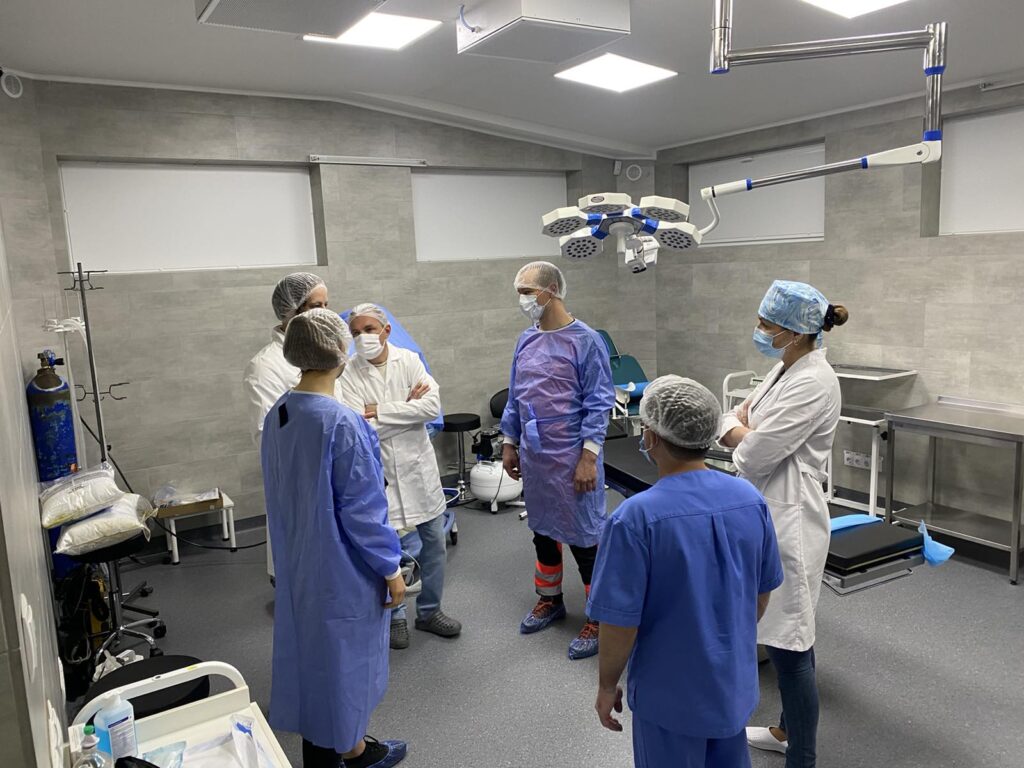
The first thing I did was write a post on social media about the creation of the First Volunteer Surgical Hospital initiative, and therefore people were vital: surgeons, traumatologists, anaesthetists, nurses, coordinators, drivers, etc. Assembling a professional team was probably my most important and challenging task, and I was very worried about whether I would succeed. People are the most important thing, because even if we had an infinite amount of money or the most expensive equipment in the world, this project would not be as valuable without volunteers.The eagerness with which everyone started the project showed me how timely the project is.
Today, both local and internally displaced people are working on the surgical hospital. It was an incredible feeling when, in the early days, people called me and asked to join the project, and I immediately asked if they knew that it was volunteering and that we had no funding. But they answered that there was a war in Ukraine and they wanted to donate their time, skills, and experience because this is their civic position.
I would like to say that this project has been very „human“ from the very beginning - people work here for people, and we try to approach each case differently and depending on the situation.
HOW THE PROCESS IS ORGANISED
Since the project's inception, about 400 people have benefited from our services, including 40 who needed specialised surgical, orthopaedic and trauma care, such as surgery for mine-blast injuries or gunshot wounds. The rest of the requests are for wound treatment, psychological trauma, and exacerbation of chronic diseases due to stress. If we are unable to help, we refer them to narrow-profile specialists, as we have agreements with other clinics that have agreed to treat them free of charge.
We also managed to reach an agreement with NGOs that supply us with medicines - doctors give them out as needed to those who apply. Sometimes people come to the station without documents, money or clothes, so where can they get the medicines they need? "Patients find us through volunteers at the railway station in Ivano-Frankivsk - most of them come here because they are fleeing the war to a safe place. They also write on social media and come to us after hearing from others. We have a coordinator who handles all questions and requests.
Speaking of the military, as soon as we were established, we sent information about surgical care to military units. We received a lot of requests, as our project was the only one in Ukraine for a while.
This project is just incredible, every day I am inspired and feel how much we are needed. I see the grateful eyes of the people we help and see how our volunteers are passionate about what they do. Every day I have new reasons to be proud. I remember that at the very beginning we needed a vital set of surgical instruments, which cost $1500, but we had no budget. I simply called the seller back, explained the situation and he told me he would send the set for free. „A “thank you„ would be enough,« he replied. It was unbelievable, no one had even hoped for something like that.
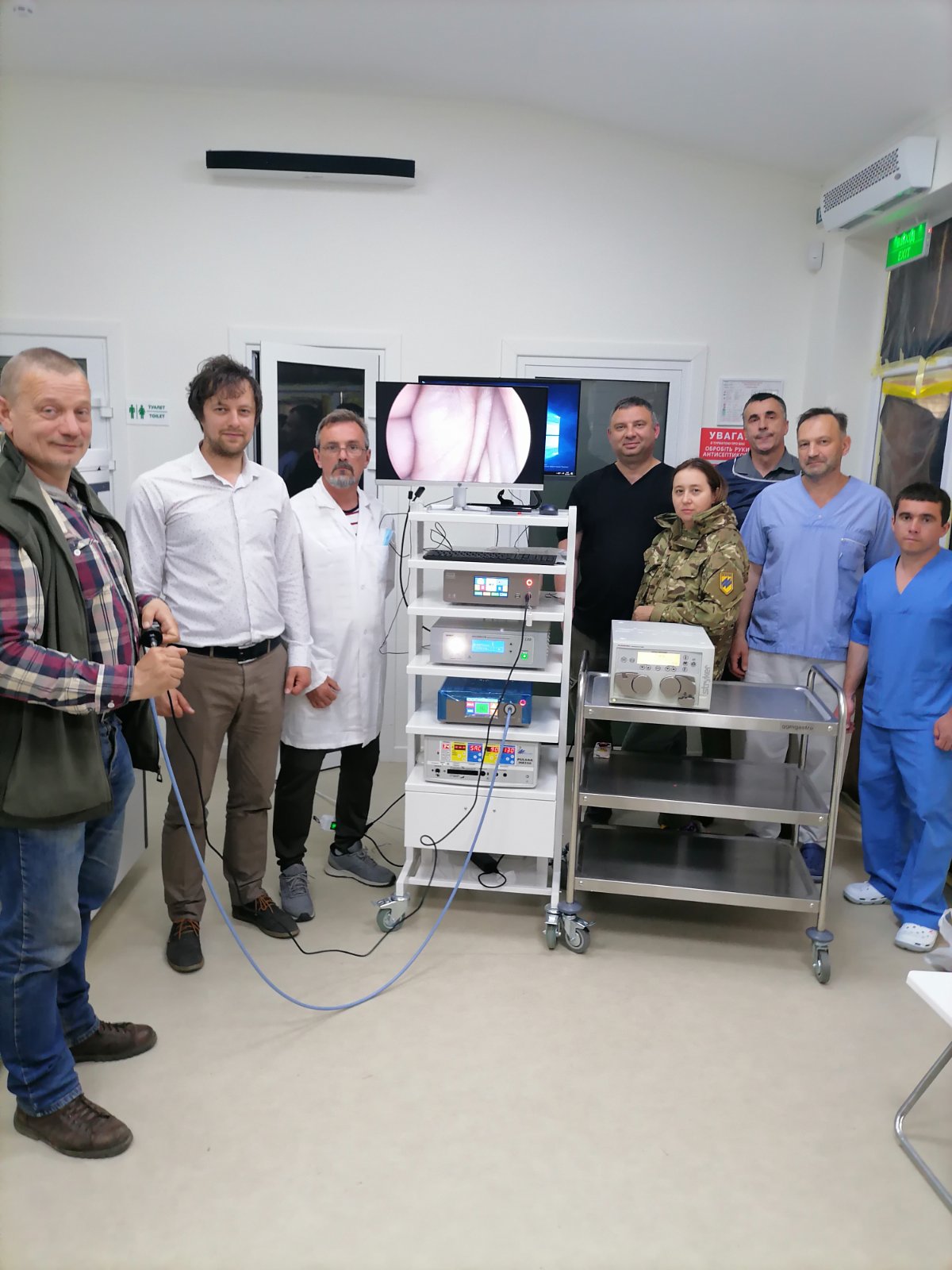

We have had experience of working with doctors from the Czech Republic, Norway, Japan and France.
We have recently been contacted by the Médecins Sans Frontières organisation. They helped us with fuel for our drivers and provided us with medicines that are difficult to obtain even in non-war times, such as hormones and anaesthetics. The organisation also helped us with renting a room, as at some point we became „cramped“ in the clinic.
Now we are working with them to organise outreach programmes - volunteer doctors come to different cities or shelters and provide medical care to war victims. Some of the foreign doctors came to us through Médecins Sans Frontières, others simply saw my advert. We have had experience of working with doctors from the Czech Republic, Norway, Japan and France. Once I asked them, „How often do they plan to come to us?“ and they replied: „As long as there is a need for our help“.

Related articles
Myths busted
«A country with deep cracks,» «torn between «East» and «West» or between «Russian-speakers and Ukrainian-speakers,» and «an artificial nation» are just some of the stereotypes and colonial myths about Ukraine that have been particularly prevalent in the German media,...

Behind the scenes of success: how to build a business in Germany from scratch and start living again
It's a bright sunny afternoon in a Stuttgart café. Across from me is a young man with an open smile and no doubt a creative profession. He looks so organic in this environment, as if he has spent his entire life among the artistic community of Stuttgart. This is Mark...
Portraiture for the sake of life
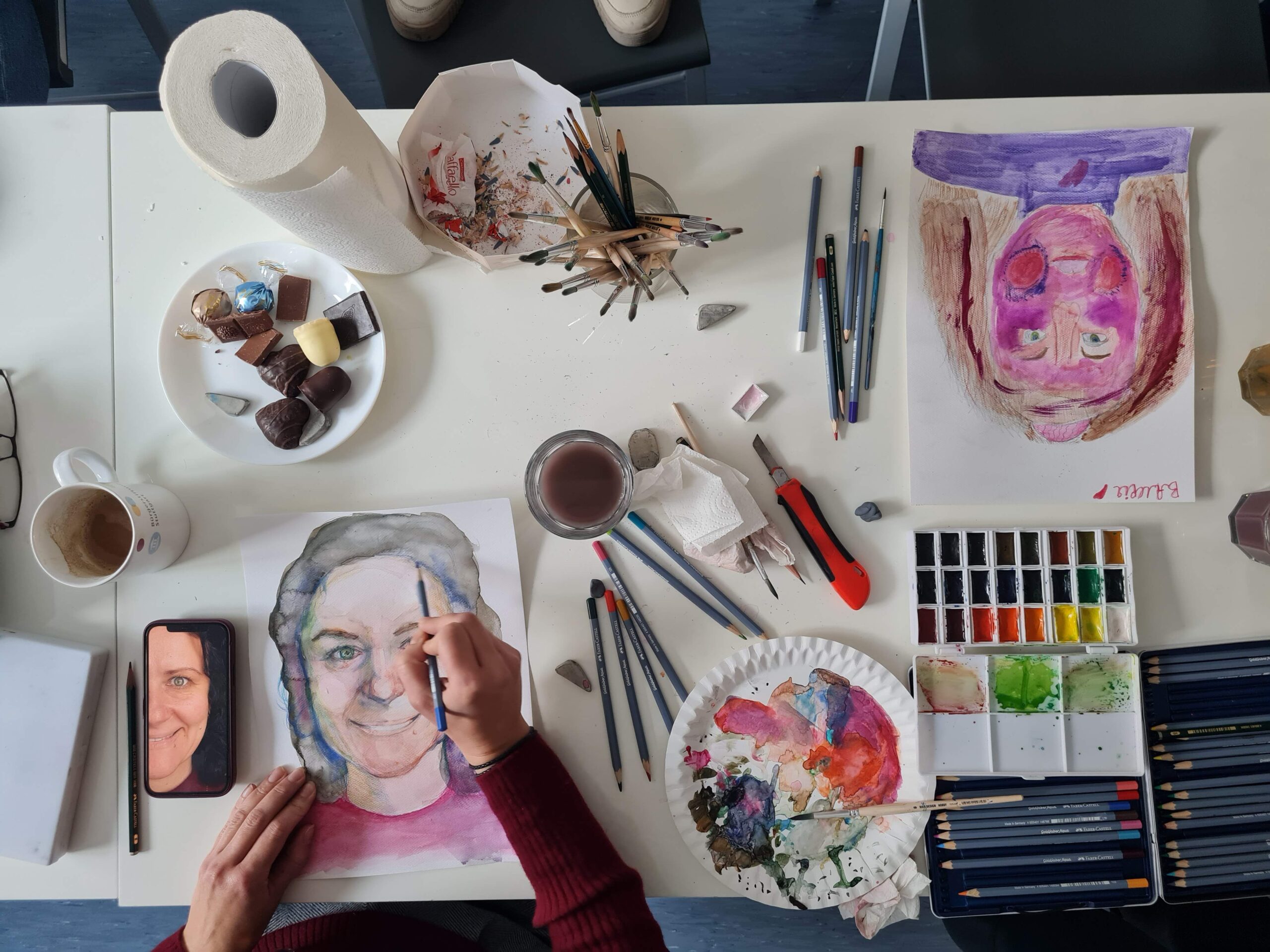
Using various forms of art, such as drawing, sculpture or collage, art therapy opens up a space for deeper self-discovery and healing of emotional wounds. The heroine of today's article is a remarkably strong woman who managed not only to survive the...
Sign up for updates
Get the latest articles and don't miss the release of new issues of magazines!