![Gel[:b]lau](https://gelblau.net/wp-content/uploads/2022/11/gelblau-logo.jpg)
Serkan Eren
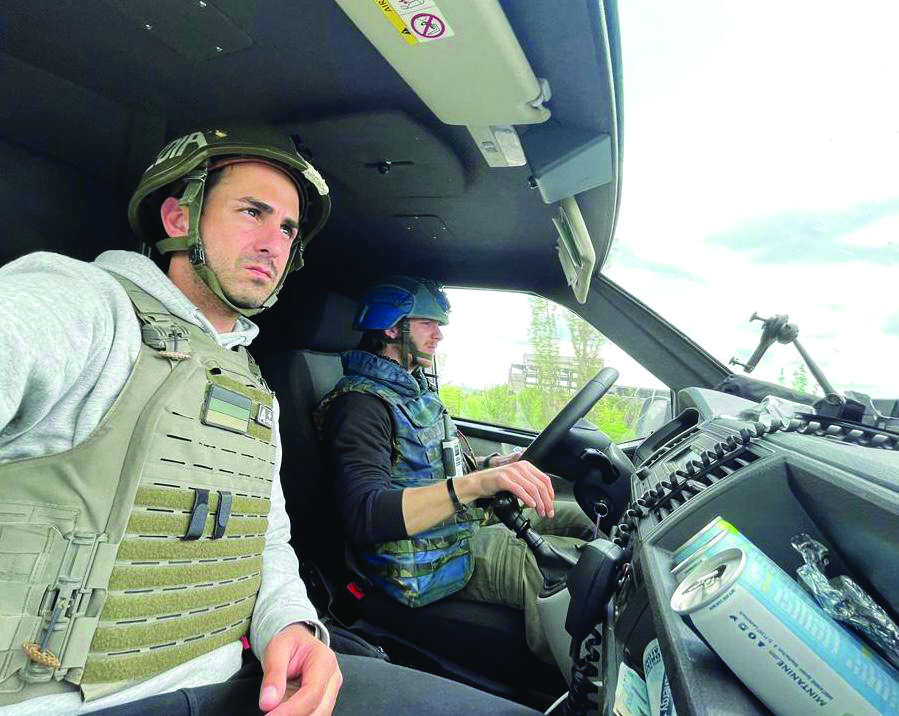
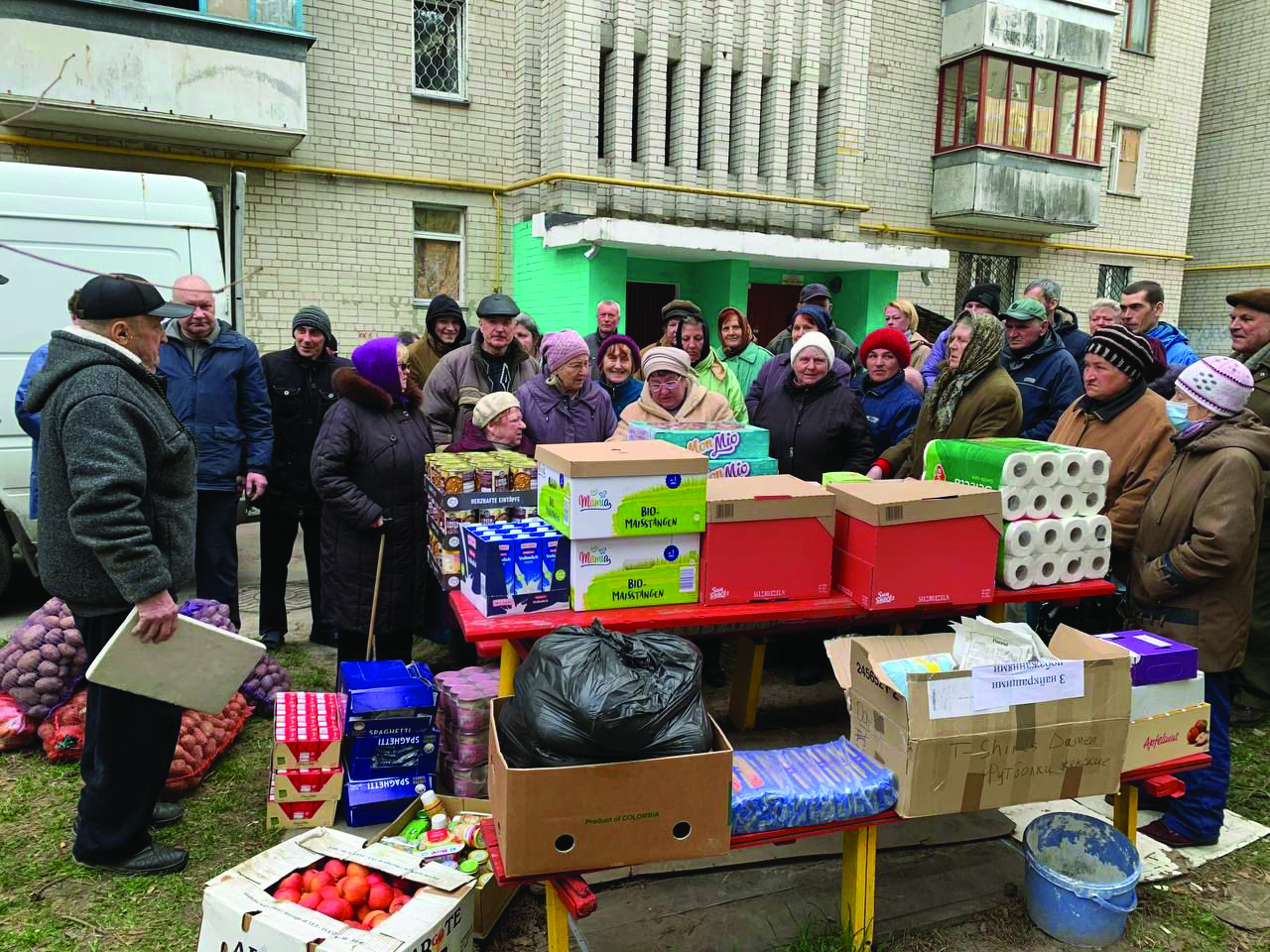
On 24.02.22 at 5am, his phone started to ring incessantly. Hundreds of messages and emails were coming in every second. There was no doubt that something really bad had happened... Since that morning, Serkan Eren and his charity STELP have delivered more than 1,000 tonnes of humanitarian aid to Ukraine and evacuated more than 1,000 people from the war zones.
— Serkan, how did you decide to found STELP?
- I was in a serious, almost fatal car accident - my heart even stopped for a minute. Then I started thinking differently, and that was the first change in my mind. The second one happened a few years later: I asked myself what my value to society was. Through lively discussions with guys who I thought were thinking wrong, I realised that my value to society remains the following I had zero, despite what I thought was the right thinking. So I spontaneously decided to rent a van and go with a friend in the Balkans to provide any help I could children who had nothing. The campaign generated a lot of media coverage, which led to a lot of offers, such as: „We have 100 blankets from IKEA“, „I have €200 - do you need it?“. And we thought: okay, we'll take everything they give us and go on the second round - to the Greek islands where the refugees arrived. At that time, I was still a teacher. Every time I had a school holiday, I would go on a trip. Thus, the charity gained momentum, and then STELP was born.
We are now active in 12 countries on 4 continents, supporting, for example, children who would otherwise go hungry, or taking girls off the streets who would have been sold into brothels. And now we are working in Ukraine.
— Can you tell us more about your mission in Ukraine?
- Less than a day after the start of the full-scale war, we were already at the Polish-Ukrainian border with the first two trucks filled with humanitarian aid. The picture we saw at the border is forever etched in my memory. Thousands of women lined up to leave the country with babies in their arms, holding their older children's hands tightly. They were carrying a couple of bags. A few hundred metres away, I saw fathers saying goodbye to their families - maybe even forever, because they didn't know when they would see them again, or if they would see them at all. And just when I thought I had seen it all and it couldn't get any worse, we reached the east of Ukraine. I have never seen such cruelty to civilians in my 6 years of work: limbs blown off, children just killed by a bomb, trucks full of corpses... I was in Beirut the night of the bombing - it was the worst night of my life. But the worst mission I've ever been on was actually in Ukraine.
— Unfortunately, our world is such that many parts of it urgently need help. What does the next step look like? How do you currently manage to work on several projects at the same time?
Right now, our focus is entirely on Ukraine, which is good because people there are really badly off and need help. But, of course, other projects have not disappeared, and managing them in parallel is actually a big challenge. We had developed a plan for a year, but then the war started, and we needed a lot of human resources immediately. In addition, many of the donations that are coming in now are earmarked for Ukraine. In the future, we will face a problem because many companies that have been helping on a regular basis have already donated their budgets for the next 2-3 years to Ukraine and will probably not be able to make any further contributions.
— Does this mean that you can't really plan for the „next step“?
-"Assistance to Ukraine is now a priority. But it is worth noting that in our other projects, the work is already quite structured. However, we could not prepare for the war in Ukraine, so it presented us with completely different challenges. Where can we get donations for food? How can we evacuate people? How do we solve the logistics? So far, we have managed to create a good structure in Ukraine, but the situation is very dynamic and needs are constantly changing. One week there is a shortage of food, the next week Russia attacks a new city and people have to flee, so sleeping bags, for example, are urgently needed.

— What would you like to say to people in Germany?
There are many heroes in Ukraine who are defending their country. There are also heroes in Belarus who blow up railway tracks because they do not support this war. But I can't stand the fact that society distinguishes only between heroes and cowards, and there is nothing in between. There are many people who are not heroes, but they are not cowards either. And when a mother with three children tells me that she does not want to flee because she and her children will be considered traitors to the Motherland for years, I do not approve of this. People who want to leave the war zone because they are sick or wounded, or simply because they cannot stand the war, should be able to flee without prejudice from society.
— I admit that this is a rather philosophical question, but what is the meaning of life for you?
I have been concerned about this excessive injustice since the moment I was born. It can be compared to taking a test: 80 points - you were born in Stuttgart, 10 points - you were born in Yemen. But you can prepare for the test, and the result will depend on you, and this is the reality. I didn't do anything about it, it was a pure coincidence, I was just lucky to be born in the Black Forest. In my opinion, the only thing that justifies and can correct this injustice is that those who are more fortunate in life should take care of and help those who are less fortunate. For me, this is the only sense I can see, and if you are so lucky and you do nothing, then you have not understood what life is really about.
Related articles
Myths busted
«A country with deep cracks,» «torn between «East» and «West» or between «Russian-speakers and Ukrainian-speakers,» and «an artificial nation» are just some of the stereotypes and colonial myths about Ukraine that have been particularly prevalent in the German media,...

Behind the scenes of success: how to build a business in Germany from scratch and start living again
It's a bright sunny afternoon in a Stuttgart café. Across from me is a young man with an open smile and no doubt a creative profession. He looks so organic in this environment, as if he has spent his entire life among the artistic community of Stuttgart. This is Mark...
Portraiture for the sake of life
Using various forms of art, such as drawing, sculpture or collage, art therapy opens up a space for deeper self-discovery and healing of emotional wounds. The heroine of today's article is a remarkably strong woman who managed not only to survive the...
Sign up for updates
Get the latest articles and don't miss the release of new issues of magazines!