![Gel[:b]lau](https://gelblau.net/wp-content/uploads/2022/11/gelblau-logo.jpg)
Myths busted
«A country with deep cracks», «torn between «East» and «West» or between «Russian-speaking and Ukrainian-speaking», «artificial nation» — These are just a few of the stereotypes and colonial myths about Ukraine that were particularly prevalent in the German media, society and politics until February 2022. On the one hand, Russian propaganda deliberately tried to spread such images of Ukraine in Western societies, on the other — The legacy of joint German-Russian colonialism at the expense of the countries, regions and peoples of East Central Europe also played an important role. The gaze was directed mainly at Russia, and this was especially evident in the romanticisation of Russian culture, while Ukrainian identity was often questioned and Ukraine remained a blind spot for a long time.
Only since February 2022 has this image begun to fundamentally change in the general public. But why are we discovering Ukrainian culture only now, when Ukrainians are dying for their country or are forced to leave it in their millions to escape Russian bombs and the Russian army?
Even for me, a historian of Eastern Europe, Ukraine (as opposed to Russia) was a blind spot in 2004, shortly after I started my studies, when the Orange Revolution took place in Ukraine. I asked my professor then what he thought would happen to Ukraine. He replied that the country would probably split into eastern and western parts. At the same time, at the beginning of my studies, another student in the seminar said that Nikolai Gogol was a Ukrainian and we were translating his name wrong. The teacher argued that no, he was a Russian writer. A lot has changed since then, but unfortunately, „Russocentrism“ has not yet been overcome, even in science.
In 2016, I visited Ukraine for the first time with German students. In Kharkiv, a local student gave us a city tour and told us how he dreamed of a free and democratic Ukraine in Europe. Not believing his ears, one of the students asked me to translate what our guide had said again. We were in eastern Ukraine, where all the people were supposedly sympathetic to Russia, right? I watched as the puzzle of stereotypes about Ukraine that had been built up in this student's mind began to fall apart.
For me personally, it was the Ukrainian Revolution of Dignity of 2013-2014 that was a turning point. I watched with fascination from Germany as people, often younger than me, fought for what was important to me, a German, is obvious, unconditional and accessible from birth. It was from that time onwards that I started travelling regularly to Ukraine and learning Ukrainian. In Lviv, I practiced my language skills and watched people transition to Russian when they saw that I spoke it better. So it was the same hyper-nationalistic Western Ukraine that fanatically rejected everything Russian? When I travelled to Kyiv, Odesa and Kharkiv, I was fascinated by the diversity of these cities and impressed by the strength of Ukrainian civil society. In the cities of Uman and Vinnytsia, which had a strong Jewish influence before the Second World War, I discovered the Jewish heritage in Ukraine.
This is how my own research into Ukraine began. During the Revolution of Dignity in 2014, I realised for the first time how much German society is imbued with colonial thinking and how many interesting things await us in Ukraine. The history of German-Russian colonialism at the expense of East-Central Europe needs to be fully understood and ended. Neglecting the prospects of East-Central Europe is one of the reasons for Germany's failures in relations with Russia in recent decades. Germany must radically rethink its relations with Russia and should not return to old dreams of «rapprochement» and «reconciliation». Today, the most important thing is to support Ukraine in its fight against Russia - militarily, politically and economically. Ukraine is defending the European security order, which protects us all. The whole of Europe stands with Ukraine.

Germany should radically rethink its relations with Russia and should not return to old dreams of «rapprochement» and «reconciliation». Today, the most important thing is to support Ukraine in its fight against Russia - militarily, politically and economically.
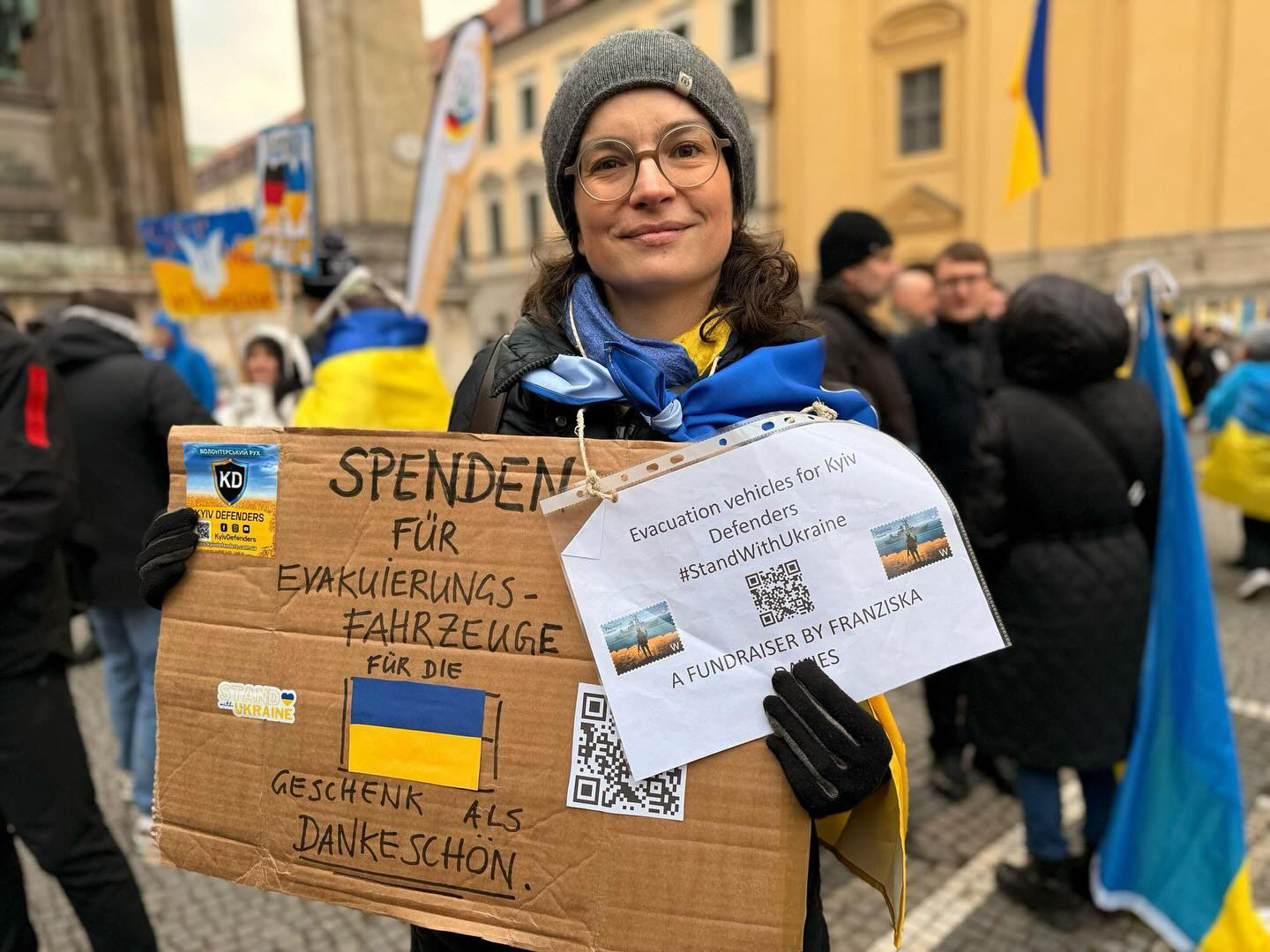
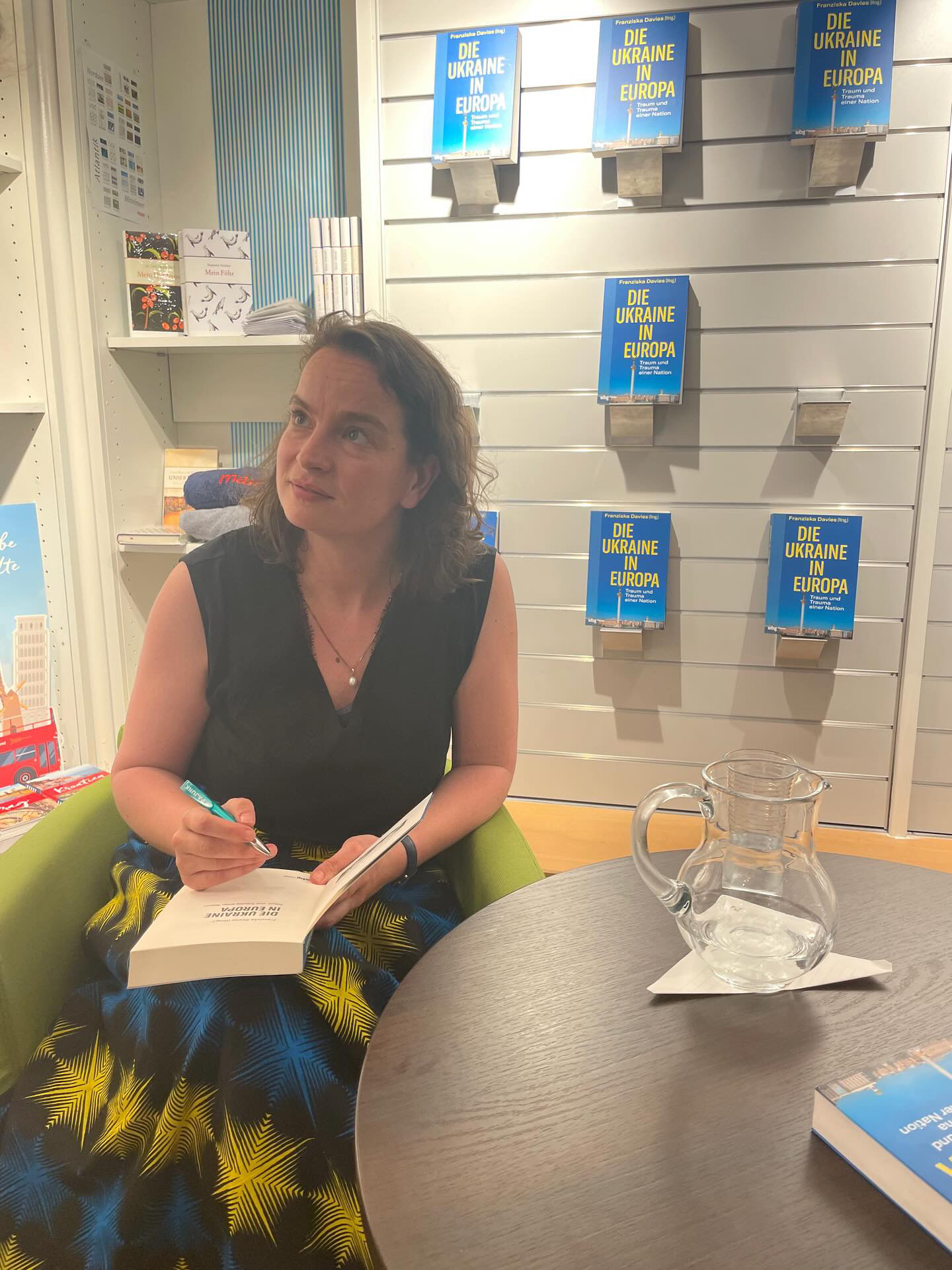
Text and photos: Francesca Davis, Historian at the Leibniz Centre for Contemporary History in Potsdam
Translation from the German: Athena Albrecht
Related articles

Behind the scenes of success: how to build a business in Germany from scratch and start living again
It's a bright sunny afternoon in a Stuttgart café. Across from me is a young man with an open smile and no doubt a creative profession. He looks so organic in this environment, as if he has spent his entire life among the artistic community of Stuttgart. This is Mark...
Portraiture for the sake of life
Using various forms of art, such as drawing, sculpture or collage, art therapy opens up a space for deeper self-discovery and healing of emotional wounds. The heroine of today's article is a remarkably strong woman who managed not only to survive the...

Family as a dream
- What do you dream about? - I don't know. - Do you know what a dream is? - No. - It's when you want something very much. Have you ever wanted something badly? That's what dreaming is. - I dreamed about you, Timur, my brothers and sister... This dialogue is heartbreaking when you find out that it is a conversation.

Sign up for updates
Get the latest articles and don't miss the release of new issues of magazines!