![Gel[:b]lau](https://gelblau.net/wp-content/uploads/2022/11/gelblau-logo.jpg)
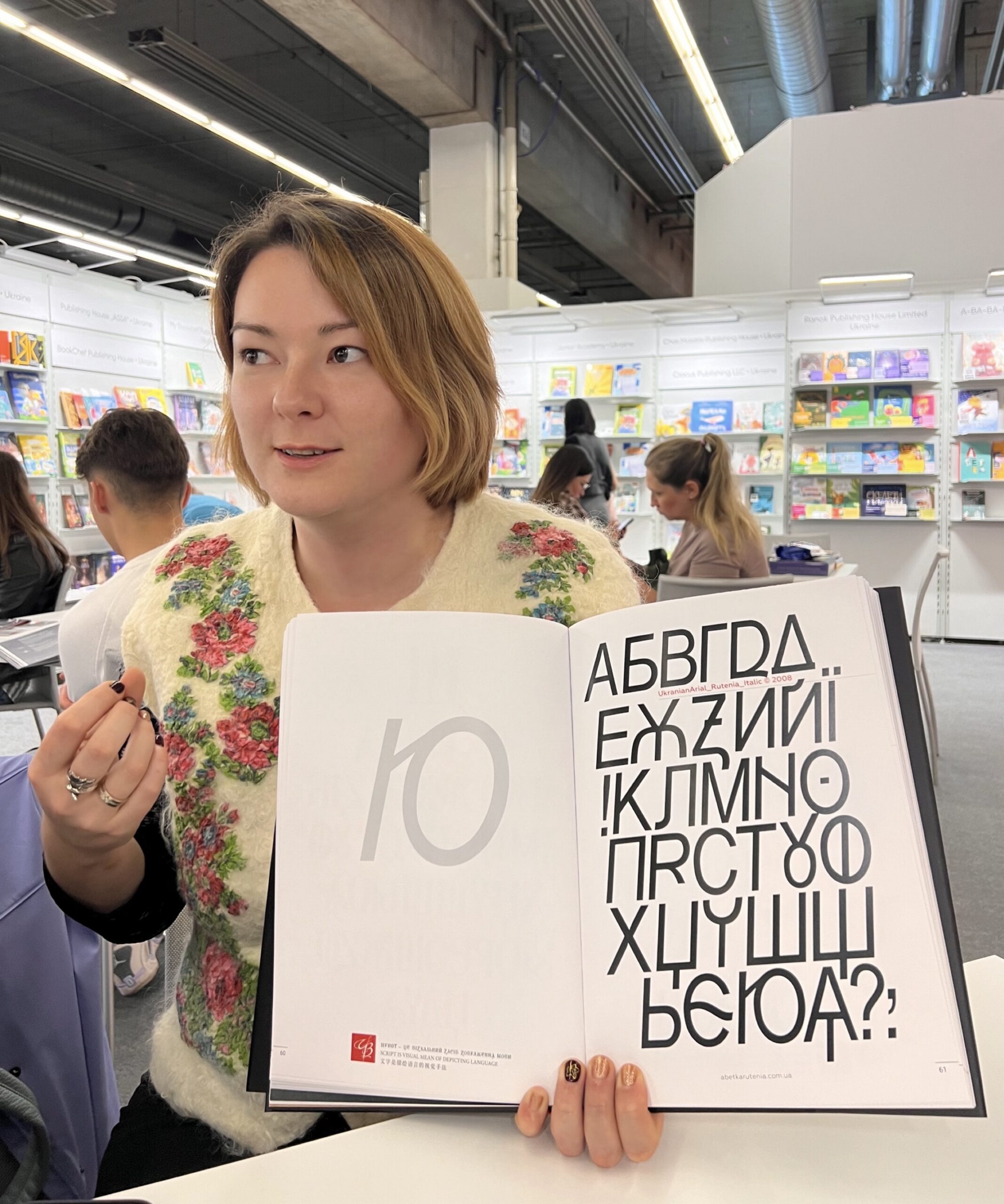
Write in Ruthenia and love Ukraine!
This year, at the International Book Fair in Frankfurt, I first learned about the Ruthenia font by Vasyl Chebanyk, which was presented at the Ukrainian stand by Adef-Knyha Publishing House. The extremely beautiful, meaningful letters of Ruthenia are absolutely in keeping with the spirit of Ukrainians.
What are rutheniums?
The first nautical chart by Angelino Dulcerta (1325-1339) and the third chart of the Mediterranean and Black Seas (1339) bear the following inscriptions RUTHENIAM and RUTHENIA (at the source of the Dnipro). In European manuscripts of the eleventh century, the name Ruthenia is mentioned in connection with Galicia-Volhynia Rus. At that time, the population of the western part of present-day Ukraine - Volhynia, Galicia, and Zakarpattia - was called Rusyns (Latin Ruthenus, plural. Rutheni), and their place of residence is Ruthenia.
It is interesting that the German-Ukrainian dictionary published in 1912 in Chernivtsi had a title: Deutsch-ukrainisches (-ruthenisches) Wörterbuch, and in the dictionary Der Sprachbrockhaus published in Wiesbaden (1962) it was stated: “der Rutene, Ruthene, n/n Ukrainer (Ukrainian). Term. Ruthenie in the sense of “Ukrainians”, “Ukraine”, are found in French, English and American dictionaries. The Encyclopaedia of Ukrainian Studies emphasises that in the late nineteenth and early twentieth centuries, the names «Ruthenians, Ruthenian» (German: Ruthenen, French: Ruthenes and English: Ruthenians) were used to distinguish the term «Rusyns, Russians» from «Russians, Russians».
Vasyl Chebanik
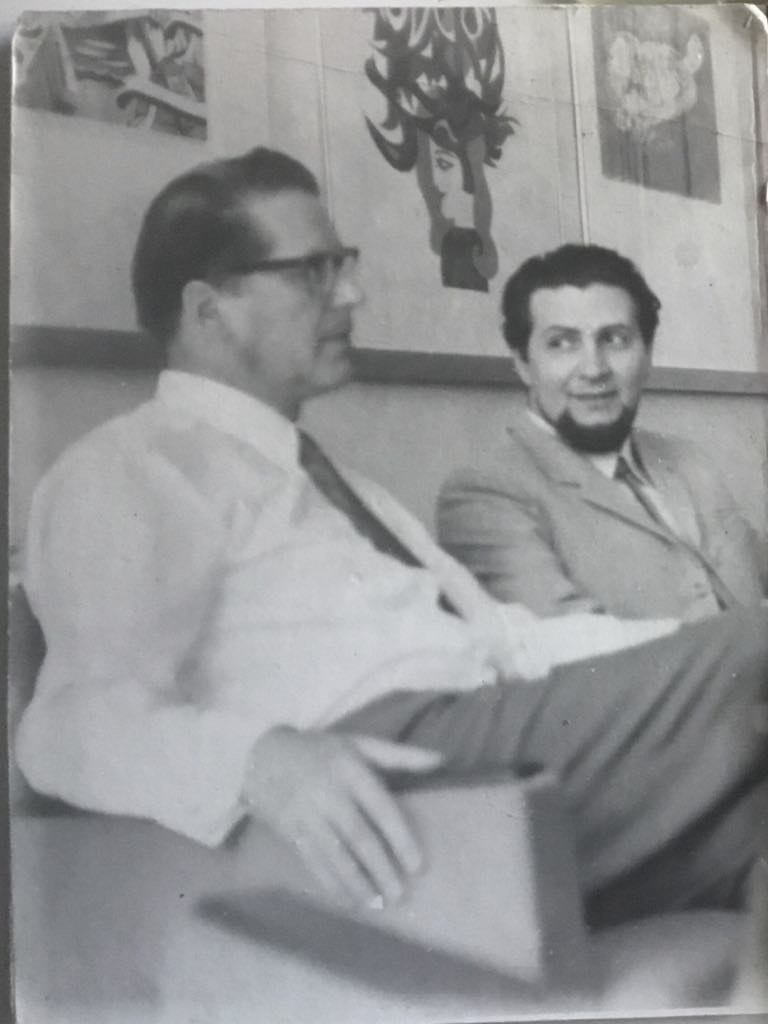
Vasyl Chebanyk is an outstanding figure who can be discussed for a long time. He is a Ukrainian graphic artist, book illustrator, teacher, member of the National Academy of Arts of Ukraine, professor (1980), head of the Department of Graphic Design at the Boychuk Kyiv State Academy of Art and Design, corresponding member of the National Academy of Arts of Ukraine, honorary doctor of the National Academy of Arts of Ukraine. In 2019, Vasyl Yakovlevych received the Shevchenko Prize for his project «Graphics of the Ukrainian Language». Thanks to his work, the revived fonts have given the ceremonial copies of the Constitution of Ukraine, starting in the mid-1990s, clear signs of Ukrainian identity.
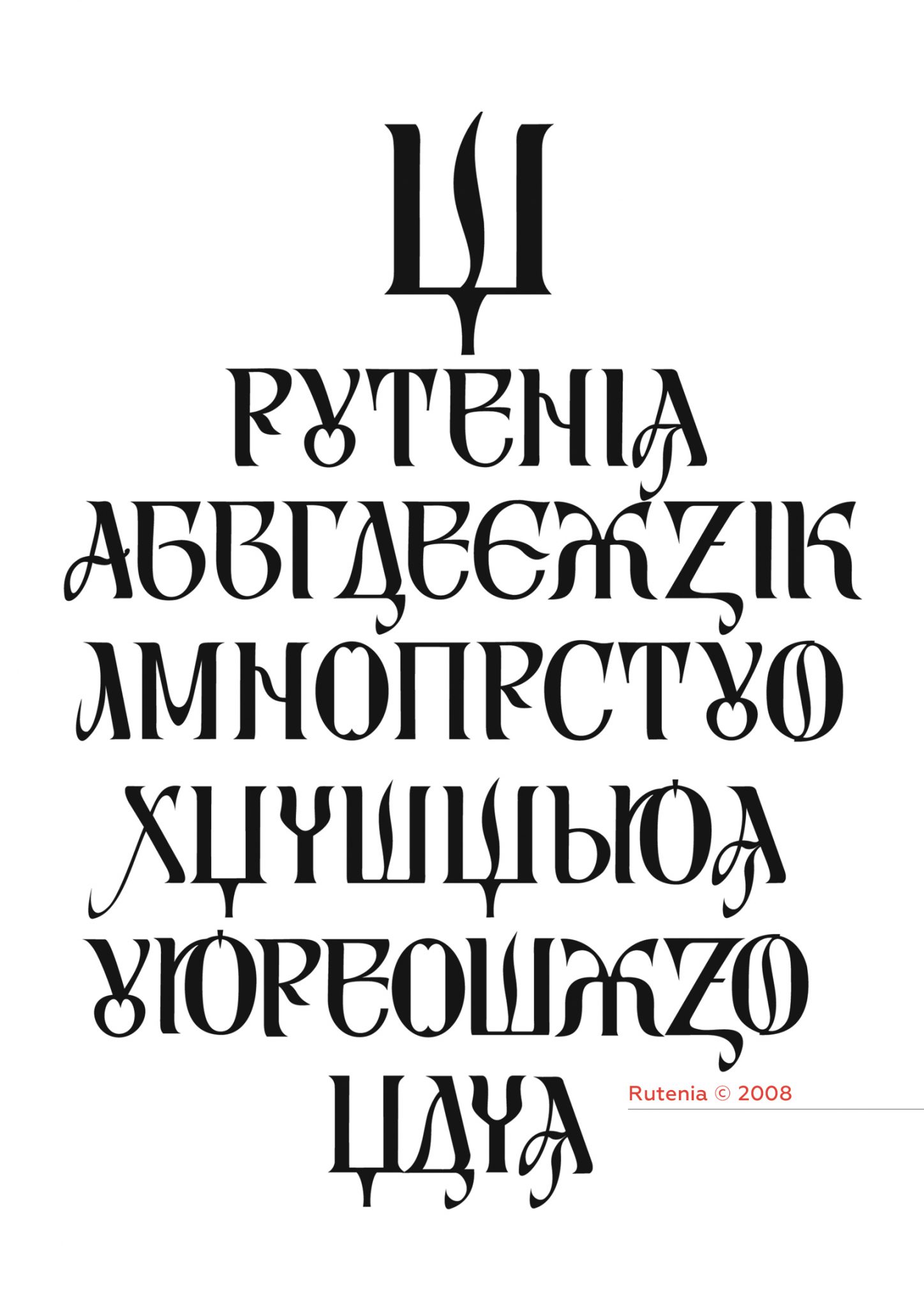
The Ruthenia alphabet - Ukrainian language graphics
The idea for the Ruthenia font arose during Vasyl Chebanyk's meeting in Leipzig in 1971 with the rector of the Higher School of Graphic and Book Arts, Albert Kaprom, who asked why Ukrainians did not develop their own alphabet. Later, Vasyl Chebanyk learned that Karl Faulmann's Book of Alphabets of All Nations and All Ages (1880) presented the Ruthenian alphabet separately from the Russian alphabet, which was the beginning of his search.
Ruthenia fonts are the common name for fonts and font sets for the Ukrainian alphabet created in 2000-2024 by Professor Vasyl Chebanyk based on the customs of the Russian era and Cossack cursive scripts as part of the Ukrainian Language Graphics project. Chebanik notes:
“Every sovereign state has its own constitutional symbols: flag, state emblem and language. And every state language consists of two parts: a melody and its visual part - the historical alphabet.”.
The Ukrainian alphabet has existed since the days of Rus-Ukraine, a thousand years before the present day. Masterpieces such as the Ostromyr Gospel (1056-1057) and the Peresopnytsia Gospel of the 16th century were printed in this alphabet. The modern Russian alphabet, which is semi-Latin in form, was created in 1708 by order of Tsar Peter the Great of Moscow. Since 1721, this alphabet has been used throughout the Russian Empire, including the territory of occupied Rus-Ukraine.
Russian TV channels repeat like a mantra that Ukraine is allegedly the territory of Russia, as we are «marked with the same font» with a slight difference in the letters «i» and «ї». Unfortunately, this is partly true: the Ukrainian language in official documents and symbols uses the Moscow font, which was used to print imperial decrees banning the Ukrainian language, as well as execution lists of Ukrainians. Today, this font is used in the labelling of government agencies, Ukrainian educational institutions, and the names of cities, villages, and streets. This gives the impression that there is no difference between us, and therefore no free Ukraine.
Suggesting changes to the graphic representation of the modern Ukrainian alphabet, Vasyl Chebanyk designed 60 fonts so that no one would consider Ukraine part of Russia anymore.
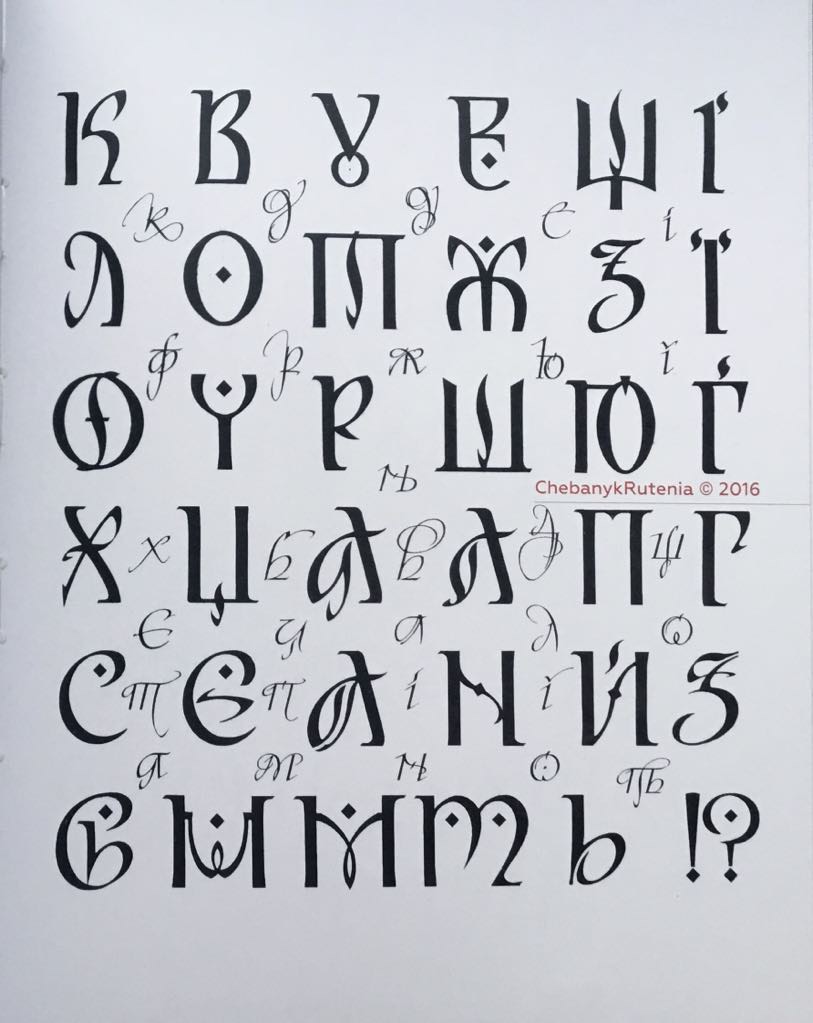
Write in Ruthenia!
Kateryna Pashchenko, editor-in-chief of ADEF-Ukraine, explains why the Ruthenia alphabet is so important to Ukrainians and talks about the steps taken to integrate these fonts into everyday life:
“When we started to get acquainted with the Ruthenia project, we were surprised to learn that the global digital space does not identify Ukraine as a separate state precisely because we and our north-eastern neighbours use the same set of letters. The difference in the spelling of a few letters was not enough. Interested and inspired by the idea of contributing to the formation of Ukrainian identity, we gladly joined the project «Ruthenia. Ukrainian Language Graphics» project. Our publishing house has already published a number of books aimed at deepening knowledge of Ukrainian history, ethnography and culture. I would like to note that the NGO InfoWarta is making every effort to ensure that Ukrainians switch to the Ruthenian alphabet. A petition in support of this project is one of the most important steps that we urge everyone to take. We also participate in events aimed at promoting this project. We are convinced that spreading information about Ruthenia and explaining the importance of the official use of our own Ukrainian alphabet will help to promote its implementation at the official and public levels. I would also like to note that we have already published two books using the Ruthenian alphabet fonts. These are «Ukrainian Fashion: From Trypillians to the Glass Generation» by the talented artist and scholar Zinaida Vasina, as well as its English translation «Ukrainian Fashion Through the Ages: 8 Millennium BC to the Present Day». By the way, a Latin version of the Ruthenia font called Didukh was specially developed for the English-language edition, which we proudly used for the book's presentation at the Frankfurt Book Fair in 2024.
Of course, we plan to continue using the fonts of the Ruthenia alphabet in our publications. Moreover, Vasyl Yakovlevich donated all his incredible fonts to the Ukrainian people, so everyone can use them by simply indicating the name of the font in the copyright column. We are especially pleased when our authors ask us to use one of Ruthenia's fonts. After all, in addition to being stylish and sophisticated, they carry the code of our Ukrainian identity. So read books, write in Ruthenia and love Ukraine!


Related articles
Echoes of these days
The idea of the Echoes of These Days project, an interactive installation by InterAKT with palm trees by Sofia Sadzhakov, audio stories by Ksenia Fuks accompanied by music by Oleksandr Chornyi, and photographs by five Ukrainian photographers Serhiy Korovainyi, Iva Sidach, Oksana Parafeniuk,...

Dotting the I's: linguocide and the revival of the Ukrainian language
In parallel with the Russian invasion of Ukraine, we are witnessing an incredible development of Ukrainian culture and its popularisation in the world. The same applies to the Ukrainian language as the main feature of Ukrainian identity. But it has not always been this way....

Ukrainian books in Germany
Since the beginning of Russia's full-scale invasion of Ukraine on 24 February, Ukrainian activists in Germany have become even more intensively involved in promoting Ukrainian culture and literature in particular. One of the main promoters of Ukrainian books in Germany is Danylo...

Sign up for updates
Get the latest articles and don't miss the release of new issues of magazines!