![Gel[:b]lau](https://gelblau.net/wp-content/uploads/2022/11/gelblau-logo.jpg)
Wartime challenges for entrepreneurship in Germany and Ukraine
Running your own business during a war is not easy. It doesn't matter whether you live in Ukraine or Germany. As an entrepreneur, you are responsible for financial success, jobs, and satisfied customers. As a human being, you have to overcome this emotional abyss into which the whole country, and the Ukrainian diaspora around the world, has fallen overnight. In a conversation with Gel[:b]lau, the heroes of our theme shared their memories of the first days of the full-scale invasion, the challenges their businesses faced, and their thoughts on being a private enterprise.
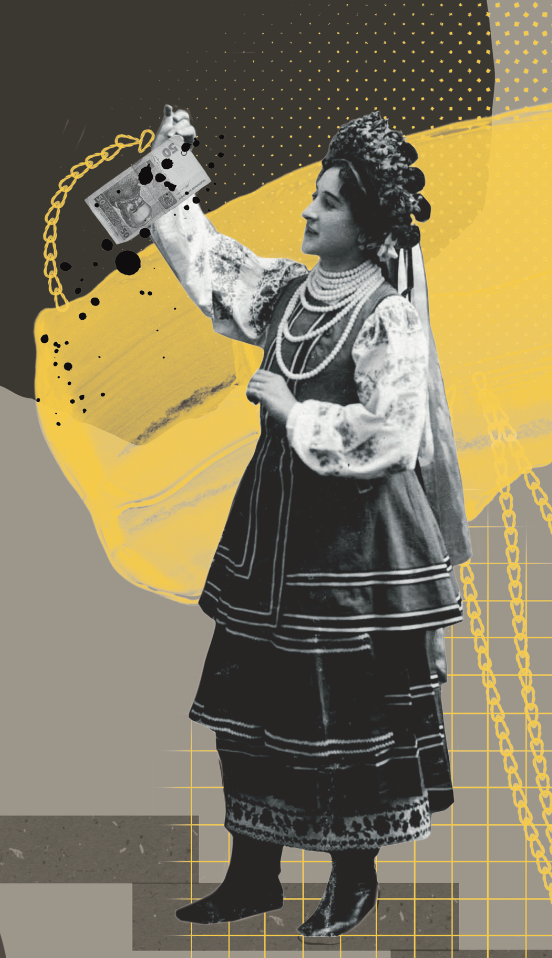

Many people know Yevhen Lesnik primarily as the head of the S.O.S. Ukraine charity foundation, which was founded in Stuttgart at the beginning of the full-scale invasion. Less than two days later, Yevhen stood with a truck full of humanitarian aid at the PolishUkrainian border. Since then, S.O.S. Ukraine has been sending humanitarian aid every week. However, Yevhen only volunteers in his spare time, as he is the head of two companies most of the time.
Yevhen moved to Germany in 2013, shortly before the Revolution of Dignity. In 2019, he and his partner from Ukraine started their own business. HandHunter UG provides chefs and service workers for hire to businesses in the gastronomic services industry. „Our business model was based on a law that was passed in the spring of 2020. According to this law, the EU allowed the entry of qualified specialists from third countries. The law was passed, but the lockdown began,“ says Yevhenii.
Nevertheless, the business survived, and Yevhenii and his partners had the opportunity to study the market from the inside - not only to understand the needs of customers, but also to master the necessary processes. That's how the idea for Blitzcatering came about - now Eugene, Igor and Alan offer catering services directly. With the outbreak of the Great War, many specialists found themselves in Germany, and unlike the requirements of the law, it was quite easy for newcomers to obtain a work permit. Currently, Blitzcatering employs three Ukrainians. The guys do not plan to stop there, and regularly conduct further interviews.
„Although the language in the kitchen is not very important, as Igor coordinates the processes in the kitchen and communication with the client during the event, we still advise everyone to complete language courses and get at least B1,“ says Yevhen. After all, for those who have nowhere to go back to or who are still planning to look for work in Germany after the victory, language is a ticket to the career world.
Having run his own business in Ukraine and in Germany, the entrepreneur believes that despite the world-famous German bureaucracy, it is still easier to start a business in Germany than in Ukraine. „You just come, fill in all the forms, provide references, and start working. But without knowledge of the language and the local tax system, you shouldn't even try. It is also always advisable to have your own capital for the first time, which is not afraid to “lose".
It is not easy to combine the management of two companies and a charity, but Yevhen tries to see the positive in everything. Even though all the members of S.O.S. Ukraine give their time for free, and the humanitarian aid in the warehouse in Stuttgart is still arriving, people, logistics and everything else needs to be organised. This is where the experience of a private entrepreneur comes in handy. In addition, owning a business helps to move social projects forward and thus support Ukraine.
Owning a business that creates jobs and volunteering outside of it is what Yevhen wants Ukrainians and Germany to see, and he sets an example himself.
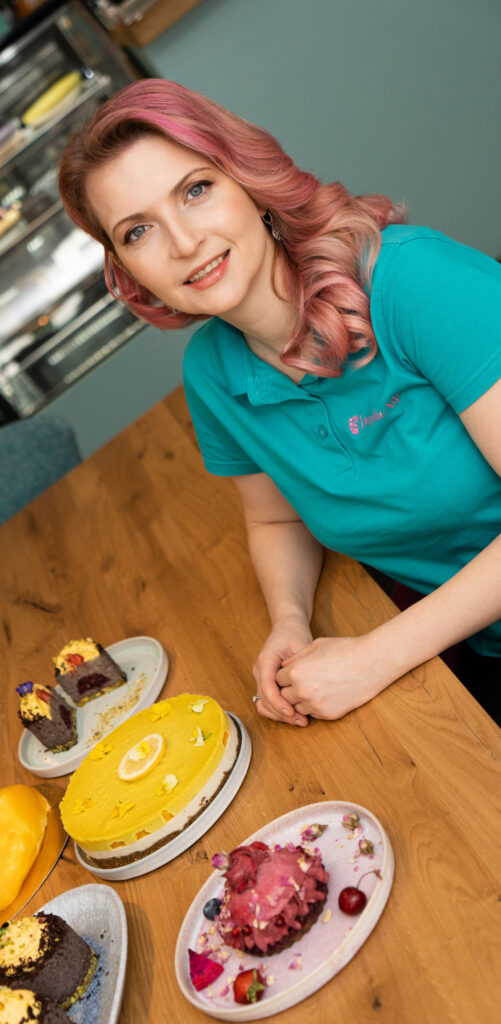
Nadiia Prokhorenko moved to Germany from Yevpatoria as a teenager. For many years, she worked as a project manager for AMG (Daimler) and Porsche, and in 2021, thanks to her love of baking confectionery, she decided to open her own vegan cafe. „I decided that either I would take this step now or I would regret it for the rest of my life,“ says Nadiia.
The beginning was not easy at all: Energetic Life, as the cafe is called, opened in February 2022, just a couple of weeks before the full-scale invasion began. At the time, Nadiya's main business challenges were
finding qualified staff, which is a problem in Germany not only for young but also for experienced restaurateurs. So the mother of two young children would get up in the middle of the night and go to work in order to bake the products herself in time for the opening.
„I couldn't concentrate on anything, I would cry at night and serve customers with a smile during the day,“ Nadiya recalls. „I was so worried about my family in Ukraine, my friends and all Ukrainians.“
The following weeks could be emotionally compared to a rollercoaster: at the same time as German society held its breath and money and put entertainment on hold to some extent, hundreds of thousands of skilled workers crossed the German border in search of safety. As fate would have it, a chef from Ukraine, who is a vegetarian himself, submitted his CV to Energetic Life. After that, Nadiya posted an advert in a Ukrainian Facebook group, and now ten Ukrainians work for her.
„I admire these people so much! They lost everything and had to start their lives from scratch. However, they are charged with positivity, motivation and passion for their work. They also manage to learn German at the same time,“ the entrepreneur is proud.
Nadiya admits that running a business during the war is not easy, even in Germany. But she still advises not to be afraid and to go ahead with her dream, because for her, Energetic Life is not only a business, but also an opportunity to develop both creatively and personally: „Unfortunately, this world is a rather cruel place, and crises have been, are and will be. But with my work, I try to make the world of my guests a little bit more welcoming.“.

More than 3,000 kilometres away from Stuttgart, in Dnipro, entrepreneur Denys Gladnev is responding to the challenges of everyday life in the military with lightning speed. In 2015, Denys asked himself what he could give his son that would be both tasty and of good quality. This is how Ecoferma was born - a chain of stores that offers its customers organic products from domestic producers. The Ecoferma team carefully selects products and ensures that suppliers comply with quality requirements.
Over the 8 years of its existence, Denys has built up a stable network of suppliers, a reliable staff, and by the time the full-scale invasion began, Eco-Farm had eleven stationary stores and an online shop. But in the first days of the war, the situation shook up significantly.
The first problem they had to solve was staffing. „We mostly employ girls, who are on average 25 years old. I understood that they were scared and didn't try to keep them if they wanted to go abroad. But over time, some of them came back,“ says Denys. Then, at the end of March 2022, the flour crisis began. Prices almost doubled as everything in stock was sold out, and it was a big question whether there would be new supplies. „We have our own confectionery production and therefore always have a strategic stock of flour. So we started packing it by the kilo and baking plain white bread,“ the entrepreneur recalls. If you, dear readers, are thinking that this bread is now on store shelves, you are almost right. The freshly baked bread was distributed free of charge by EcoFarm employees to those in need. Similarly, in winter, when there was no electricity for three days, you could recharge your phone and drink hot tea for free in EcoFarm stores.
Looking back on the last winter, we can say that Denis's team was relatively lucky, as he bought the first generators in advance. However, it was probably impossible to prepare for last winter.
„Back then, every car park attendant became a «generator manager». A generator model that once cost UAH 7,000 was selling for 35,000. We have a lot of dairy products, and they would have all gone sour, so we had to pay,“ Denys says with a smile. When the situation escalated, he moved his warehouse to his own house, so it was easier to keep the freezers and refrigerators running smoothly.
But not all issues ended in a relative happy ending. One of EcoFarm's most important suppliers, the Stepovyi breeding farm, is located in the village of Zapovitne, Zaporizhzhia Oblast, which is unfortunately currently under occupation. Its chairman of the board, Anatolii Volkov, took over in 1995, immediately after the company's structural reorganisation, and has literally become a model of what agriculture should be like in Ukraine, and perhaps in the world. „You can't imagine what Zapovitne looked like,“ Denys says enthusiastically, „You drive along the road and suddenly paradise begins. Such a beautiful village, like in a film. Be sure to write about Mr Anatolii, he literally put the entire local community back on its feet. Unfortunately, they came under occupation.“ In the first months of the war, Stepovyi still tried to supply products to EcoFarm, but in June 2022, deliveries stopped. In August 2022, Anatolii Volkov passed away before the victory.
Despite the difficulties with suppliers and logistics, Ecoferma's products are of the same quality. At the moment, eight out of eleven stores remain, but the online store is in the process of being completely redesigned. The goal is to restore the possibility of delivery, now in the new military realities. So for those who value healthy eating and want to support the national producer, visit EcoFarm.„

Written by Gerlach Ilona
Related articles
Myths busted
«A country with deep cracks,» «torn between «East» and «West» or between «Russian-speakers and Ukrainian-speakers,» and «an artificial nation» are just some of the stereotypes and colonial myths about Ukraine that have been particularly prevalent in the German media,...

Behind the scenes of success: how to build a business in Germany from scratch and start living again
It's a bright sunny afternoon in a Stuttgart café. Across from me is a young man with an open smile and no doubt a creative profession. He looks so organic in this environment, as if he has spent his entire life among the artistic community of Stuttgart. This is Mark...
Portraiture for the sake of life
Using various forms of art, such as drawing, sculpture or collage, art therapy opens up a space for deeper self-discovery and healing of emotional wounds. The heroine of today's article is a remarkably strong woman who managed not only to survive the...
Sign up for updates
Get the latest articles and don't miss the release of new issues of magazines!